Unlock Your Best Run: The Golden Rules of Strength Training for Beginner Runners
Ever feel like your running routine is missing something? You hit the pavement, log those miles, and work on your pace, which is absolutely vital for improving your endurance and speed. But here's the thing: focusing only on running can leave you vulnerable. To truly support every stride, boost your performance, and, crucially, stay injury-free, you need to weave strength training into your schedule. It's not just an optional extra; it's a fundamental pillar of a resilient running body.
Why Strength Training is a Game-Changer for Beginner Runners
Honestly, I think many new runners overlook the power of strength training. They're so eager to run that they forget about building the foundation. But from what I've observed, neglecting this aspect often leads to a painful detour – an injury that stops you in your tracks. Industry experts agree: strength training offers two massive benefits for runners: warding off injuries and supercharging your performance.
Consider this: running involves countless repetitions of the same movement. It's fantastic for your cardiovascular system, but it also means your body is constantly absorbing impact in a fairly limited range of motion. Andy Speer, a Peloton tread and strength instructor, puts it perfectly: "Running demands high repetitions of the same movement in a limited range of motion." What I've found is that strength training, especially when it incorporates movements in multiple directions and through a greater range of motion (think lateral lunges or single-leg deadlifts), helps balance out all those repetitive steps. It’s like giving your body a full-spectrum workout that running alone can't provide.
Beyond just muscles, strength work fortifies your connective tissues – those crucial tendons and ligaments. Having robust, resilient connective tissue significantly reduces your risk of those nagging overuse injuries that can plague runners. The key takeaway here is that you're not just building bigger muscles; you're building a more durable, shock-absorbing system.
It's a common story: runners skip strength training until an injury forces them into rehabilitation. But trust me on this, even a simple, consistent strength program can make a world of difference. It helps correct muscular imbalances before they become problems and keeps you running strong for the long haul.

Getting started can feel a bit daunting if you're new to lifting. You might wonder where to begin or what exercises are best. That's totally normal! We've gathered some golden rules from strength and running pros designed to give beginners a solid foundation for an effective and efficient weight training program. With these insights, you'll have the knowledge to start seeing real progress.
Essential Knowledge for Beginner Strength Training
1. Begin with Bodyweight Exercises
Don't feel pressured to immediately grab the heaviest weights in the gym. Seriously, there's no rush to "pick things up and put them down." Industry experts suggest that novice lifters should always start with bodyweight exercises. Why? Because it's crucial to learn proper technique first, ideally with guidance from a professional. This allows your body an essential adjustment period, much like when you first start running. You might experience increased fatigue, and you'll definitely need more recovery time.

Once you've mastered the mechanics of bodyweight movements, then – and only then – should you gradually introduce light weights. As Andy Speer points out, the stimulus you get from a full range of motion, even with minimal weight, is plenty when you're just starting. Proper technique, maintaining balance, and achieving a full range of motion are far more important than how much weight you're moving.
The goal here is long-term progress, just like with your running. You want strength training to be enjoyable and effective, which means making small, consistent progressions. If you're constantly cripplingly sore after every session, you won't stick with it, will you? So, start light and build up.

From what I've observed, many beginners mistakenly think they need to push to their absolute max. Yusuf Jeffers warns against frequently attempting a one-rep max (the heaviest weight you can lift just once) when you're new to weights. That's a technique for more experienced lifters. Instead, to truly build strength, you should aim for weights that are around 85 percent of your one-rep max, focusing on lower repetitions. Why does this matter? Pushing too hard, too often, can severely tax your central nervous system, making recovery difficult and negatively impacting your subsequent runs and other activities.
2. Weave in Isometric Holds
It's a common misconception that you need to be constantly moving heavy iron to get fit. But here's the truth: isometric exercises are incredibly beneficial for runners aiming to build strength and stability. What are they? These moves involve contracting a specific muscle or group of muscles and holding that contraction in a static position for a set amount of time. Think planks, wall sits, or hollow-body holds.

Andy Speer considers isometrics a powerful training tool, especially for runners. Holding positions for 30 to 60 seconds, such as a lunge hold or a single-leg balance, effectively strengthens your muscles, fortifies connective tissues (like those around your joints), and builds a rock-solid core. Honestly, I think these are some of the most underrated exercises for runners.
The key takeaway here is that isometrics help your body become a resilient buttress against both internal and external forces. This ability to maintain a stable posture while running is crucial. Good running posture makes you more efficient and helps prevent common overuse injuries like knee pain, IT band syndrome, and plantar fasciitis.

3. Focus on Your Entire Lower Body
Everyone knows the glutes are a runner's powerhouse – studies confirm that well-developed glutes give you more propulsion. Your quads and hamstrings are certainly vital too. But what about everything below the knee? Often, these crucial areas get neglected, and that's a mistake you shouldn't make.
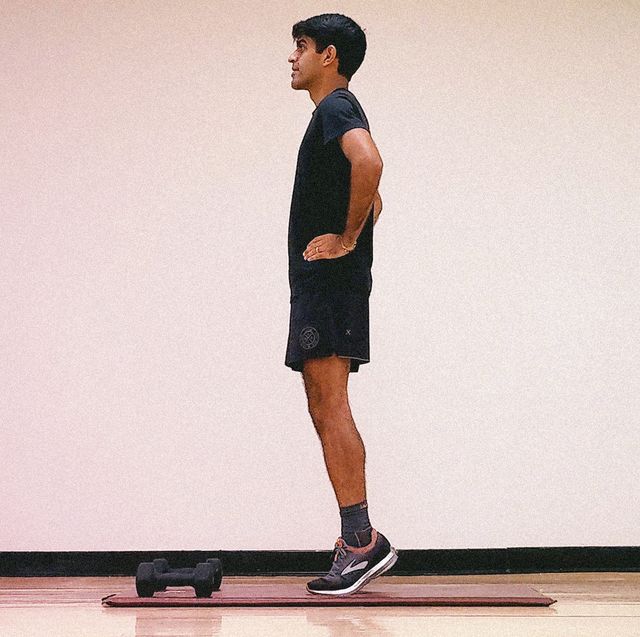
Your calves and the anterior tibialis (that muscle running down the front of your shin) play incredibly important roles in your running stride, according to Speer. Your calves are responsible for lifting your heel and generating a significant amount of the power and force needed for running. Meanwhile, the anterior tibialis assists with dorsiflexion – the action of pulling your toes up towards your shin, which is critical for foot clearance and landing.
So, what's the practical advice? Using a wall for balance, perform bodyweight calf raises and toe raises. Start with 2 to 3 sets of 10 repetitions for each, gradually increasing those reps and sets as you get stronger. It's a simple addition that yields big results.
4. Prioritize Compound Movements
When you're trying to decide what exercises to include in your first few strength workouts, Yusuf Jeffers suggests gravitating towards compound exercises. These are movements that engage multiple muscle groups and joints simultaneously, mimicking natural running patterns. Think squats (which work your quads, glutes, and core) rather than bicep curls (which isolate just the biceps).

Why choose compound lifts? They recruit more muscle groups, leading to a greater overall physiological response. Studies, such as one published in Frontiers in Physiology, back this up, showing that multi-joint exercises deliver higher gains in physical performance, improving both cardiorespiratory fitness and maximal strength. That's a win-win for runners!
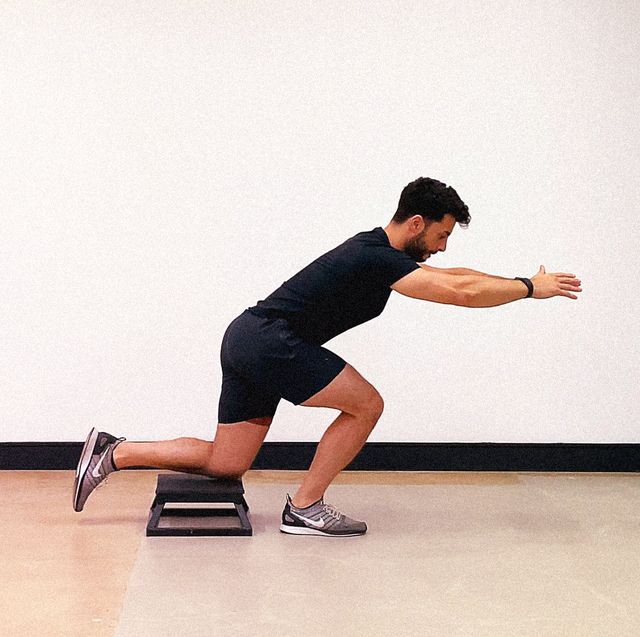
Furthermore, since running is essentially a series of single-leg movements, your strength workouts should definitely include unilateral (single-side) exercises. Examples include single-leg deadlifts and various lunge patterns. Speer recommends dedicating one to two sets in each workout where your muscles reach fatigue by the last couple of reps. The rest of your session, however, should be all about perfecting your technique and improving your range of motion.

A word of caution: be extremely mindful not to overload your muscles. The last thing you want is for your strength training to negatively impact your running form or cause you to compensate due to soreness, which could easily lead to an injury. Carly Graham, a physical therapist, wisely suggests consulting with a PT to ensure you have the necessary mobility for the movements you want to perform and that you're loading your muscles correctly. It's also a smart move to hire a personal trainer who can teach you proper form and help identify any muscle imbalances you might have.
Best Lower Body Workouts
| Workout Title | Focus Area | Expert Contributor |
|---|---|---|
| Best Calf Exercises for an Explosive Stride | Calves | Raj Hathiramani |
| The Best Quad Exercises for Runners | Quads | Daniel Giordano, D.P.T., C.S.C.S. |
| A Glute-Strengthening Workout to Power Your Run | Glutes | Joshua Simpson |
5. Harmonize Your Strength Workout with Your Running Schedule
Strength training should always complement your running, not sabotage it. In my experience, this is where many beginners go wrong. Natalie Niemczyk, a physical therapist, suggests performing strength workouts two to three times per week during your off-season, scaling back to one to two times per week when you're actively training for a race.

Here's why this matters: starting a new strength program too close to race day can actually hurt your running performance and increase your injury risk. Just like with running, your body needs an adjustment period when you begin lifting. You'll likely experience more fatigue and require additional recovery.
Adding too much lifting volume when your running mileage is also increasing can be counterproductive, Speer notes. If your weekly running volume is already challenging, keep your lifting consistent but manageable. When you reduce your running mileage, that's an excellent opportunity to push harder with your weights.
Yusuf Jeffers advises periodizing your strength training, just as you would your running. He recommends doing the majority of your heavy lifting during speed (anaerobic) training phases, rather than during endurance (aerobic) phases. Why? Because strength, speed, and power share more similar physiological demands than strength and endurance.
6. Engage Your Mind
This might sound a bit "woo-woo," but trust me, it's critical: make sure you're not just going through the motions. You need to actively "feel" the correct muscles engaging. For instance, when you're squatting or lunging, focus on driving through your heels to truly activate your glutes. During core work, consciously keep your core tight and braced.
This focus on the muscle you're working while contracting it – often called the mind-muscle connection – can lead to greater increases in both muscle size and strength. Yusuf Jeffers wholeheartedly agrees, emphasizing that performing each repetition with excellent form, prioritizing quality of movement over sheer quantity, is paramount. For example, shortening your range of motion can sometimes mask weaknesses in strength or muscle recruitment at the very end of a movement, which is often where people are weakest. That said, it's perfectly fine not to squat to full depth if you're not yet confident in that range of motion.
7. Schedule Rest Breaks
Remember, your strength day is precisely that: a strength day. Resist the urge to turn your lifting session into another cardio workout if your primary goal is to get stronger.
What I mean is, take adequate rest between sets. Let your heart rate come down if it spikes. Yusuf Jeffers explains that proper rest enables you to put forth appropriately intense efforts, which are necessary to stimulate those muscular adaptations you're after. For example, resting for at least a minute between big compound movements like deadlifts allows you to continue lifting a heavy weight without dropping down or sacrificing your form because you're simply too tired. This isn't laziness; it's smart training.
8. Document Your Progress
You meticulously track your runs, right? (And if you're not, you probably should be!) Tracking provides invaluable insight into your progress and helps you pinpoint areas for improvement. Well, the same principle applies to your strength training. Yusuf Jeffers suggests recording the exercises you perform and the weights you lift for each one.
The reason is simple: progressive overload. This means gradually increasing the weight, frequency, or number of repetitions in your strength routine. It's the engine that drives strength gains and prevents you from hitting frustrating plateaus. To ensure you're consistently moving forward, you absolutely need to know where you started and where you're currently at. Plus, seeing the progress you've made – perhaps starting with bodyweight squats and now confidently lifting 40 or 50 pounds – is a huge confidence booster and a fantastic motivator!
Empower Your Run: Unlock Your Potential
Integrating strength training into your running routine isn't just about avoiding injury; it's about transforming your entire running experience. By following these foundational principles – starting with bodyweight, embracing isometrics, training your whole lower body, focusing on compound movements, aligning your schedule, engaging your mind, prioritizing rest, and tracking your progress – you'll build a more resilient, powerful, and efficient runner. What surprises most people is just how quickly these small changes can make a massive difference. So, go ahead, lift smart, run strong, and enjoy the journey!
Get your dream items with discounts up to 80%


Comments
Post a Comment